


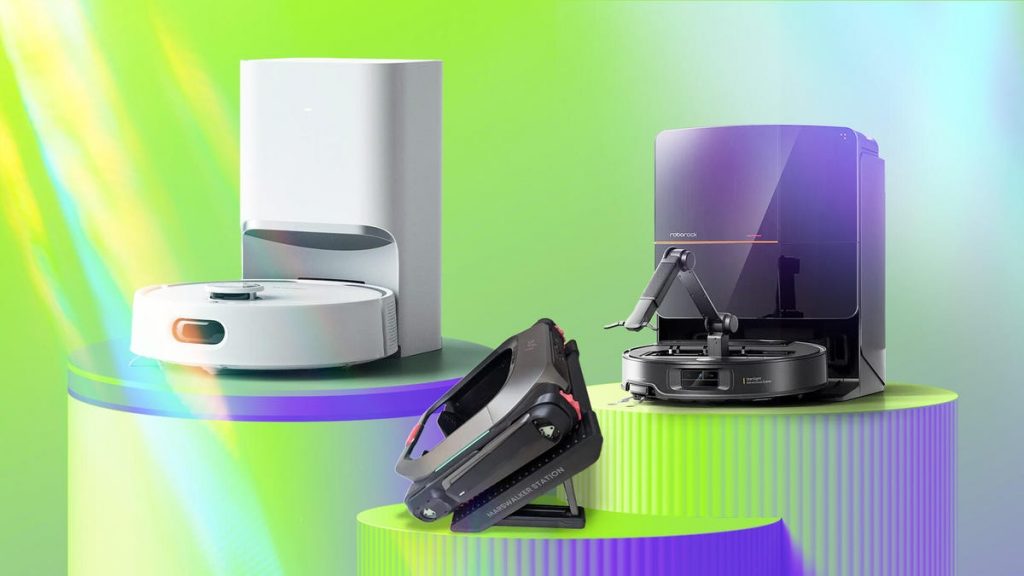
Today’s robot vacuums aren’t the same Roomba your parents first bought. The earliest versions had little to no navigation, barely managed to vacuum and got stuck on just about everything. If you’ve been holding off on buying a robot vacuum because you don’t trust it to do the job well — things have changed. Robot vacuums now have more capable mapping and improved cleaning features, meaning they can do more than just vacuum: They can also mop, help you sort items, overcome obstacles and even climb stairs.
Together, our Louisville testing lab and I have tested more than 100 robot and cordless vacuums, giving us a solid pulse on the latest trends in the vacuum industry. I’ve watched vacuum technology innovate and grow over the past few years — and at CES 2026, I predict it’ll be a robot vacuum showdown in the race to become the ultimate home helper.
Read more: CNET is Choosing the Best of CES 2026 Awards
What I expect in the coming year — and at CES — is even more acceleration and innovation. Big names like Eufy, Dreame, Ecovacs and Roborock, along with lesser-known brands like SwitchBot, 3i and Yeedi, are all competing to be the top robot vac with premium features. These brands are working hard to deliver what we, the consumers, really want: true automated cleaning. That means better vacuuming, smarter mopping, genuine stair climbing ability, auto-refilling water systems and even evaporative water recycling, all while we humans don’t lift a finger.
Here’s what I think consumers will see at CES 2026, and in our homes, in the next few years.
Don’t miss any of our unbiased tech content and lab-based reviews. Add CNET as a preferred Google source
My robot vacuum predictions for CES 2026:
- Successful stair-climbing capabilities
- Robotic arms with improved object recognition
- True hands-free robot vacuums with all-in-one base stations
- Market prices to come down for premium features
We’ll see at least one robot vacuum successfully climb a flight of stairs
What I like to call “the stair problem” has existed for robot vacuums since the first model was released in 2001. If you live in a multi-story home with steps or stairs, your only recourse has been to physically carry it up and down the stairs or shell out for a second or third unit. For many people with multi-level homes, I suspect the answer is to choose not to buy a robot vacuum at all. That’s set to change in 2026 and beyond. I expect to see the first robot vacuum that can climb stairs at CES this year and come to market in 2026.
We saw previews of stair-climbing capabilities at CES last year, with the Saros Z70 and X50 Ultra able to cross dual thresholds up to around two inches high. That wasn’t quite the same as climbing stairs, though, since both robovacs still need human assistance if you want them to climb a flight.
That changed at IFA Berlin in September 2025, where we saw two separate demonstrations from the Eufy Marswalker and Dreame’s Cyber X concept.
Neither is exactly a robot vacuum on its own. Instead, they’re autonomous shells that fit over an existing robot vacuum — like the Omni S2 in Eufy’s case — and use limb-like treads to climb stairs. Once at the top, the robot exits the shell and gets to work. It’s worth noting that, for now, neither demo can clean the stairs themselves, though that may change in future iterations.
Eufy says its Marswalker will eventually come to market, though pricing and availability have yet to be announced. Dreame’s Cyber X, meanwhile, remains a proof of concept. Still, I expect to see some version of this technology reach consumers — and for other robot vacuum makers to join the race to solve the stair-climbing challenge — at CES 2026.
More robotic arms with improved object recognition
Picking up and sorting items seemed like an odd feature for a robot vacuum when we first saw the Roborock Saros Z70 demonstrate it at CES 2025. Since then, it’s appeared on the Dreame Cyber10 Ultra, and there’s been rumblings about other manufacturers adopting the feature. But so far, no others have brought it to market. Yet.
When I tested the Saros Z70 earlier this year, my main takeaway was that the OmniGrip arm, while a neat feature, only worked correctly some of the time. Most notably, the Z70 would often begin sorting but give up halfway through. Adding multiple pets (I have three cats) made things even more complicated, as the robot struggled to navigate around them and couldn’t handle my biggest use case: pet toys.
The addition of the arm feature came with trade-offs: a smaller dustbin, more moving parts and software bugs that have taken time to iron out. Generally, what I want most from a robot vacuum is reliable object recognition and obstacle avoidance — picking up and sorting items is a nice bonus, but only if it works well.
Since then, the Saros Z70 has received some software updates that have improved its capabilities and made it more reliable at completing sorting tasks. However, the items it can recognize, pick up and sort are still limited. In a CNBC article, Roborock noted that the challenge in improving the robot arm is primarily in on software and data end, rather than the hardware end. The Saros Z70 was also staggeringly expensive at launch, priced at $2,600 — making it the most expensive robot vacuum we recommend. That said, it does occasionally go on sale for less.
I suspect that price is the real reason we haven’t seen other manufacturers, aside from Dreame, race to get arm-equipped robots onto the market. The software needs to be improved to be more functional and reliable, and the cost needs to come down (more on that below). Once that problem is solved, I expect to see a wider range of manufacturers bringing forth the capability.
I predict only a handful of robot vacuum manufacturers will attempt to incorporate robotic arm technology. The real breakthrough will come on the software side — when companies can train robotic arms to recognize and grasp common household clutter like pet toys, children’s toys and clothing. That kind of advanced object recognition can benefit robot vacuums even without arms, and that’s what I expect to see more of at CES 2026. As for the robotic arm itself? I don’t think it’ll go mainstream for a few more years.
Most hands-free upgrades will be mainstream
Another trend I’m seeing among robot vacuum manufacturers is a push to reduce daily and weekly maintenance. And it’s not just about self-emptying docking stations that empty the dustbin, store debris in a dustbag and recharge the vacuum between cleanings.
I’ve seen more manufacturers adding mopping capabilities to their robot vacuums. Newer models, like theEureka J15 Pro Ultra, include separate clean and dirty water tanks. Their self-service stations can clean, sanitize and dry the mopping pads or rollers between cycles, ensuring your floors are only mopped with fresh water. This trend points to a future with minimal human involvement. In most cases, all you’ll need to do is program the vacuum, refill the clean water tank and empty the dirty one.
While not 100% hands-free, it’s miles ahead of where robot vacuums were only a few years ago.
Some robot vacuum manufacturers are trying to get to 100% hands-free. The SwitchBot S20, for example, comes in two models: one with a regular, separated clean and dirty water tank, and another with a unique auto-fill and drain system. This requires you to hook up the base station to a water connection and drain from under your sink, similar to installing a dishwasher or a washer. Once connected, the base station handles refilling the water tank and draining the dirty water automatically, without you needing to empty anything except the dustbin.
It’s a neat concept and part of an ongoing trend toward hands-free maintenance, but this is one I don’t think will catch on. Having unsightly tubes running from under your kitchen sink to a robot vacuum (or needing to drill into cabinets) makes it impractical for renters and unappealing to homeowners. I tried to install the SwitchBot S20 in my most recent visit to our Louisville testing lab and quickly realized that I was out of my depth and would need the assistance of a plumber.
A more practical equivalent may be 3i’s S10 Ultra, a water recycling robot vacuum that distills and reuses dirty wastewater by heating and condensing it. It potentially means the robot can pull water out of the air and spare you from frequent refilling. The downside is that the base station is truly massive, the biggest I’ve seen at some 18 inches wide, 18 inches deep and nearly 24 inches high. It also weighs a hefty 50 pounds (80 pounds total). The sheer bulk makes it impractical for anyone tight on space.
For now, I expect all-in-one base stations that charge and empty dustbins and have cleaning/sanitizing features for mopping to be the mainstay of hands-free maintenance for robot vacuums at CES 2026 — at least until we see truly autonomous humanoid robots that can do things like empty the trash or wash dishes.
Prices will gradually come down for more advanced features
If there’s one thing preventing widespread adoption of these super-advanced robot vacuums, it’s their price. Some of the fanciest robot vacuums we recommend can cost upwards of $1,000, and in our current high tariff environment, tech doesn’t seem to be getting much cheaper.
But the truth is that cheaper robot vacuums are becoming just as capable as the most expensive models. The premium features we usually see in expensive vacuums are becoming more common across a range of prices. The tech race in robot vacuums is no longer about who can make one that vacuums and mops — it’s about which models do it better.
“If we only focus on the premium segment, in the end, other than being the best robotic vacuum cleaner company in the world, we will have nothing,” said Quan Gang, Roborock president, in a translation by CNBC. He emphasized the need to lower the price of premium robot vacuums to encourage more people to buy them. Despite being the second-largest market for robot vacuums, the US has an adoption rate of just 22%. In comparison, China, despite its much larger population, has an even lower adoption rate at 5.6%.
This is a trend we’re already starting to see. Our current crop of midprice and budget robot recommendations cost $500 to $700, and offer 90% of the features the premium models do, including self-emptying docking stations, mopping capabilities, effective mapping and improved obstacle avoidance.
Examples include:
- Yeedi M12 Pro Plus ($800 at full price, but often on sale for as little as $400)
- 3-in-1 Eufy E20 ($650 for full price, often much less)
- Roomba 205 DustCompactor Combo ($470 full price)
- SwitchBot K11 Plus ($400 full price)
All of the robot vacuums listed above include mopping functionality and either a base station or compressing dustbin to store dust for months before needing to empty.
The lesson here is that robot vacuums are becoming cheaper even as they become more capable. It’s less common to find robovacs that don’t have features like mopping, such as the ultra cheap Eufy RoboVac 25C (usually $150 or less on Walmart), than it is to find ones that have both vacuuming and mopping, because that’s most of them.
I expect this to be an ongoing development through 2026, with prices continuing to fall below $500 for premium features, including the lift systems that allow robots to overcome obstacles and robot arms that help them sort. This is similar to the trend we saw with cordless vacuums recently, with some of the best-performing cordless vacuums in terms of suction and battery life being more affordable ones.