


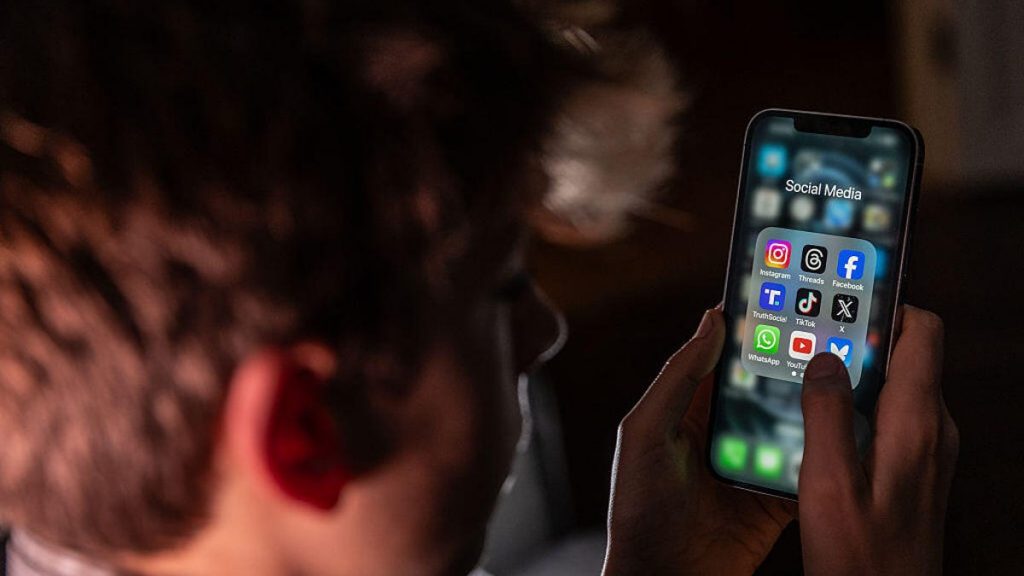
Spain has announced plans to introduce legislation that would ban children under 16 years old from using some of the most popular messaging and communication applications online.
Spanish Prime Minister Pedro Sanchez announced the ban during a speech at the World Government Summit in Dubai. While scant on details, he said the ban could go into effect next week and would be enforced through what Sanchez described as «effective age-verification systems — not just checkboxes, but real barriers that work.»
The prime minister on Tuesday called social media a «failed state» and blamed algorithms for distorting public conversation for everyone, but especially for children online.
«Today, our children are exposed to a space they were never meant to navigate alone: a space of addiction, abuse, pornography, manipulation and violence,» Sanchez said. «We will no longer accept that. We will protect them from the digital wild west.»
The proposed legislation is only one piece of a broader five-step process to regulate social media companies, according to Sanchez. The other proposed laws aim to hold platform executives accountable for the legal infringements of their sites, outlaw algorithmic amplification of illegal content and implement a system to track how social media applications are fueling division and promoting hate speech.
It follows a landmark law in Australia that bans children younger than 16 from using TikTok, Facebook, Instagram, Threads, X, Snapchat, YouTube, Reddit, Kick and Twitch. It’s currently unclear which platforms will be affected by the Spanish legislation, as «social media platforms» have yet to be defined under the potential new rules. It’s also unknown whether platforms like Discord, WhatsApp and Pinterest would qualify.
Sanchez specifically criticized TikTok, Instagram and X during his announcement, stating that «[his] government will work with the public prosecutor to investigate and pursue the legal infringements committed by Grok, TikTok and Instagram.»
CNET has reached out to a communications representative of the Spanish government for clarification. Representatives from TikTok and Meta (which owns Facebook, Instagram, Threads and WhatsApp) didn’t immediately respond to requests for comment. X also didn’t immediately respond, but CEO Elon Musk tweeted his criticism of Sanchez following the speech.
The precedent from down under: Spain follows in Australia’s footsteps
While Spain could be the first country in Europe to finalize legislation banning children from accessing social media, its ban looks extremely similar to the new law passed in Australia in December. In Australia, social media companies are legally liable for removing people under the age of 16 from their services by implementing age verification technologies. Any company found in contempt of this law is subject to a $33 million fine.
The mixed reactions from tech companies to Australia’s social media ban may provide insight into how they will react to a potential ban in Spain. TikTok, Facebook, Instagram and Snapchat complied with the new rules, beginning the process of removing infringing accounts from the platform.
Reddit is pushing back by challenging the law in Australia by issuing a High Court challenge, claiming in a statement that the legislation «forces intrusive and potentially insecure verification processes on adults as well as minors, isolating teens from the ability to engage in age-appropriate community experiences.» When Spain’s ban goes into effect, social media companies may use this precedent to issue similar challenges in the country.
In December, Denmark, Norway and Malaysia were looking to spearhead similar legislation. The UK, France and Greece may soon also follow suit. France’s National Assembly has already passed a bill to ban under-16s from social media, but it’s tied up in the country’s Senate. A similar bill is also being debated in the UK’s House of Commons.
In addition, nations like China, Russia, North Korea, Iran, India, Turkey, Saudi Arabia and Uganda have already instituted partial or complete bans of various apps — though in these cases, the bans were for largely political censorial reasons, whereas the Australian ban and the proposed Spain ban cite safety concerns as the driving force behind the new law.