

The keynote opening Snapdragon Summit 2026 in Maui offered Qualcomm’s latest outlook on how AI agents could organize daily life through the phones people carry. CEO Cristiano Amon explained how agents would make purchases, outlined preparations for a future in which they can access bank accounts or credit cards, and argued that the concept has merit.
That problem remains unsolved and may take a long time to address. The concern is that an agent could steal bank details, drain savings and accumulate credit-card debt. At this year’s summit, however, Qualcomm suggested a model in which the agent checks with the user repeatedly before spending money.
“When an agent is acting as a proxy of you, you need to trust the agent, and you need to trust the device, especially for something like shopping,” Amon said during the keynote.
The CEO was naturally promoting a system built around Qualcomm technology, but he acknowledged the uncertainty people may feel about letting AI make purchases. He said the company is developing protections for personal information and creating a more secure device environment.
“The agent needs to authenticate and operate and keep you in control,” Amon said.
About 45 minutes into the keynote, Qualcomm illustrated how the process might work. A woman wearing smart glasses passed a store as her AI agent recalled that she had previously bought sunscreen and lip balm there and asked whether she wanted to purchase more. After she approved the order, the agent told her she could collect the items. She then asked about a laptop, was guided to a shop displaying several models, chose one and had to confirm the purchase before the agent completed it.
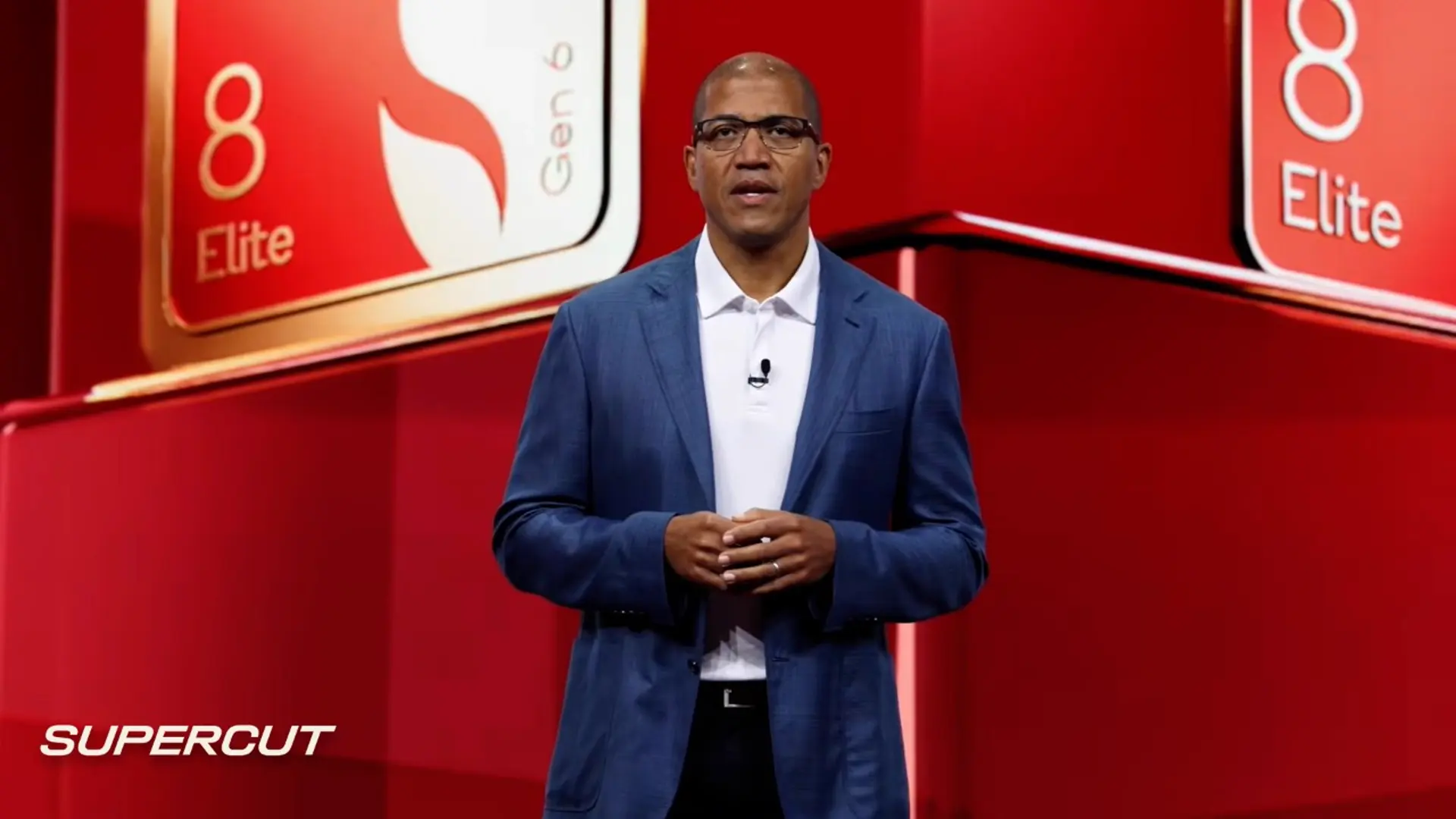

Qualcomm is approaching the issue cautiously. It brought in representatives from a trusted purchasing platform to reassure the audience that established financial institutions will participate in the process. MasterCard CEO Michael Miebach said in a prerecorded video that people will only rely on systems they trust to safeguard payments and data. Amon was also joined on stage by MasterCard senior fellow Raja Rajamannar, who discussed the necessary trust that an AI agent will act on someone’s behalf and suggested that trust could come from a familiar brand such as Mastercard.
The presentation was self-promotional, but it addressed a understandable concern. Over the past several decades, people have grown increasingly comfortable with online shopping as early doubts gave way to greater confidence in the process. AI agents create another layer of separation between shoppers and their money, so companies must establish a new foundation of trust. A workflow with explicit points where the agent pauses for approval before spending on someone’s behalf offers some reassurance as this unfamiliar method of payment develops.
The long road to having AI agents pay for you


The central technology is the AI agent itself, which runs on a smartphone. During a media roundtable following the keynote, Chris Patrick, Qualcomm’s senior vice president and general manager of handsets, stressed that earning consumer confidence in the process will take time.
Dino Bekis, Qualcomm’s senior vice president of the premium mobile and AI business unit, argued that reassurance will require financial institutions to play a central role. Just as card providers currently handle fraudulent charges or other purchases made with a stolen card, they will also need to provide protection when an AI agent incorrectly buys something the consumer did not approve.

“Financials [will need to] do some level of backstop to say, hey, you as a consumer, if this happens, there’s going to be some level of consumer protection for you, right?” Bekis said.
Later, I entered a demonstration room where Qualcomm showcased concepts presented on stage, including one that simulated an agent buying an item on a person’s behalf. The process followed three distinct stages: identifying a potential purchase, having the agent present a relevant suggestion for approval and completing the transaction.
Francisco Cheng, Qualcomm’s senior director of product marketing, wore off-the-shelf TCL Rayneo smart glasses and examined a poster advertising an experience—an aptly Hawaiian volcano tour. The agent recommended a specific trip to a nearby volcano, and after Cheng confirmed that he wanted to buy it, the agent running on a connected smartphone transferred the transaction to Mastercard for payment. In theory, the credit-card company could also resolve any dispute.

“I think if there’s a level of mistrust by letting an agent handle things through and through, at least Mastercard can step in as a trusted payment provider to handle that piece of it,” Cheng said.
Cheng acknowledged that people will likely remain wary of the entire process, but trusted brands can oversee each stage. He said that is how public acceptance of online shopping developed.
“I’m old enough to remember when I was skeptical about making online payments and conducting banking transactions online. I was comfortable writing a check to somebody,” Cheng said. “But today, I wouldn’t even think twice about paying bills online. It’s a learning process.”
Editors’ note: Gfaloe’s travel costs were covered by Qualcomm. The judgments and opinions of Gfaloe are our own.