


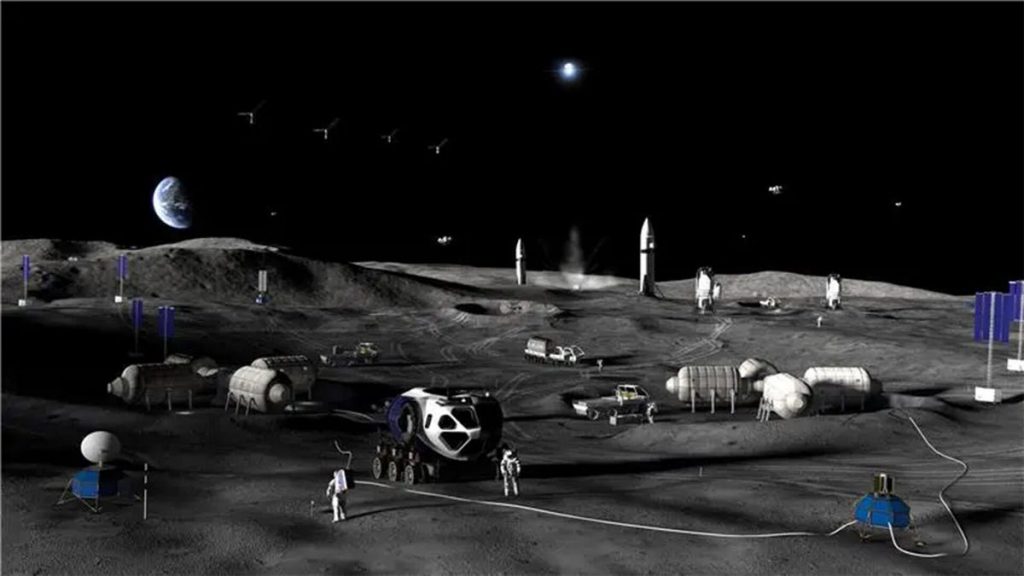
For the second time in as many months, NASA is flipping the script and changing its planned missions for the moon. At the end of last month, the agency pushed back its moon landing to the Artemis IV mission while vowing to complete lunar missions more quickly. This time, the agency said it’s scrapping the Lunar Gateway, a lunar orbiter scheduled to launch in 2027, in favor of building a base on the moon.
NASA formally introduced the new initiative, dubbed Ignition, during a 3-hour press conference on Tuesday. Ignition houses many plans for NASA’s immediate and long-term future, including replacing the International Space Station before it becomes unusable in 2030, and building «SR-1 Freedom,» a nuclear-powered spacecraft scheduled for launch to Mars in 2028.
«NASA is committed to achieving the near‑impossible once again: to return to the moon before the end of President Trump’s term, build a Moon base, establish an enduring presence and do the other things needed to ensure American leadership in space,» NASA Administrator Jared Isaacman said in a statement.
The new moon plan is set to happen in three phases over the next few years. Phase one would be to replace one-off missions with a «templated approach» to gain learning through experimentation. Phase two would see the construction of a «semi-habitable infrastructure» on the moon. Phase three would add permanent infrastructure to that moon base.
NASA hasn’t set a concrete timeline for any of these objectives, but Isaacman said the «clock is running in this great-power competition,» presumably alluding to China’s goal of putting humans on the moon by 2030. During a speech with various aerospace companies, international space agencies and Congress during an event at NASA headquarters, Isaacman said the entire initiative would take seven years and cost $20 billion.
This new plan also involves halting the construction of the Lunar Gateway station. The orbiter has been under construction for years and has been criticized for being a wasteful distraction from the real goal of putting humans back on the moon. Isaacman hinted that the orbiter will be repurposed for use on the lunar surface, which will no doubt come with its own set of challenges.
What else is NASA working on?
Ignition came with other announcements, including that the Nancy Grace Roman Telescope is ahead of schedule and under budget, the success of DART’s mission to change an asteroid’s trajectory by ramming into it, the Parker Solar probe’s continued success in studying the sun and a host of additional projects that are launching between 2026 and 2030.
Much like when it overhauled the Artemis missions last month, NASA is continuing its mission to get things done as quickly as possible. And while the moon base and the Artemis missions are the forefront of NASA’s current plans, according to Isaacman, thousands of ideas are being worked on behind the scenes.
«The whole point of today was not to come and give you a bunch of great PowerPoint [presentations] and sit and wait for it all to come to fruition,» Isaacman said. «This is about action right now … We want to get moving.»