


Key takeaways
- The foldable iPhone may debut as soon as September 2026.
- Potential names include iPhone Fold, iPhone Ultra or iPhone Flip.
- Initial version is likely a book‑style design, with a clamshell model to follow.
- Leaks suggest a wider, squat form factor reminiscent of the original Google Pixel Fold.
- Analysts estimate a price range of $2,000‑$2,500.
After Samsung, Google and Motorola have rolled out folding phones, the question remains: when will Apple introduce its own? Rumors now point to a late‑2026 launch for a device possibly called the iPhone Fold or iPhone Ultra.
The latest whispers come from leaker Digital Chat Station, who says the name could be iPhone Ultra, and from leaker Sonny Dickson, whose dummy molds hint at a wide, squat form factor for the iPhone Fold.
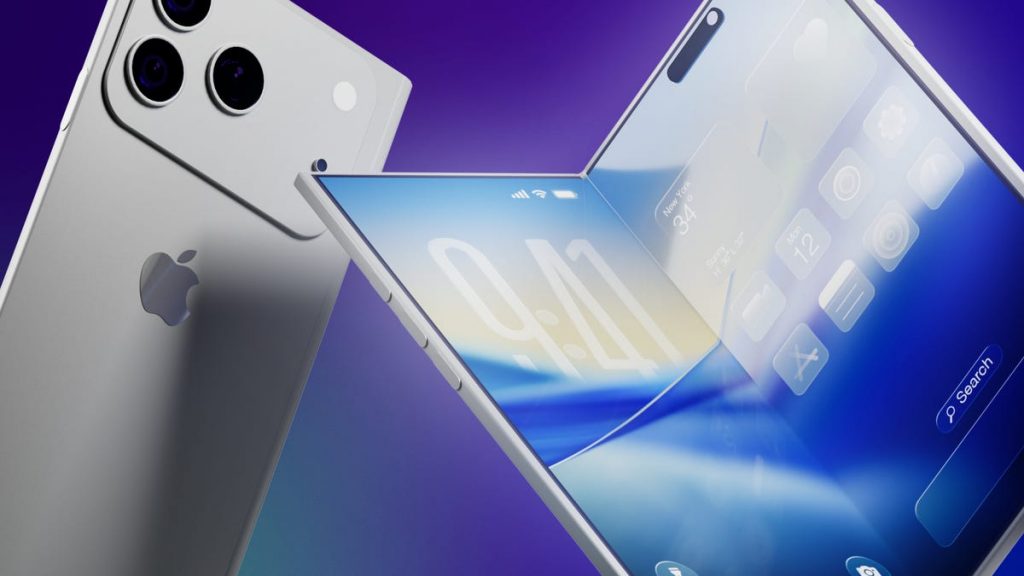
Design leaks increasingly suggest a book‑style foldable that is broader and shorter, looking more like the original Pixel Fold than the taller Galaxy Z Fold 7 or Pixel 10 Pro Fold.
According to a recent Chinese report from UDN, the iPhone Fold’s screen may have little to no visible crease – a major breakthrough, as early foldables have been plagued by noticeable folds.
Leaker Fixed Focus Digital posted on Weibo that Apple’s hinge might be made from liquid metal, an alloy supplied by Liquidmetal Technologies under an exclusive contract dating back to 2010. This material has been mentioned in patents but has yet to appear in a consumer product beyond the iPhone SIM‑eject tool.


Apple has not confirmed any foldable plans.
Foldable phones still represent a tiny slice of the global market. A recent Gfaloe survey found 64 % of respondents aren’t interested in a foldable device. However, IDC analysts predict that global foldable sales could jump 19 % if the iPhone Fold launches in 2026, potentially giving Apple a 24 % market share.
iPhone Fold specifications
No official specs exist yet. If Apple proceeds, the device will likely feature its latest A‑series chip and enough RAM to drive dual displays. Analyst Kuo predicts a 5.5‑inch outer screen and a 7.8‑inch inner panel for the book‑style model, with a thickness of 9‑9.5 mm when folded and 4.5‑4.8 mm when opened. A front‑facing camera may work in both positions, alongside two rear lenses.
Kuo also expects the phone to use the high‑density battery cells found in the so‑called “ultrathin iPhone 17,” which could mean the device drops Face ID in favor of a side‑mounted Touch ID.
In January, a note seen by Gfaloe suggested a 12 GB RAM configuration, matching the starting spec of the Galaxy Z Fold 7. A Weibo leak from Fixed Focus Digital claimed a 5,500 mAh battery – larger than the 5,088 mAh pack in the iPhone 17 Pro Max.
Design outlook
Apple has filed patents covering origami‑style, flip‑up and wrap‑around displays. Bloomberg reported a prototype as early as 2021, and rumors have swung between a clamshell and a book‑style debut.
Analyst Kuo’s March 2025 forecast described a book‑style device with a 5.5‑inch outer screen, a 7.8‑inch inner screen, stainless‑steel/titanium hinges, and a return to side‑button Touch ID.
3D CAD renders from Sonny Dickson show a squat, wide shape more akin to the Pixel Fold than the tall Galaxy Z Fold 7, suggesting Apple may favor width over height.
Recent TrendForce reporting (cited by 9to5Mac) claims an advanced adhesive has reduced the internal crease, potentially solving Apple’s biggest obstacle.
Release timeline
Apple has not set a date, but Bloomberg’s Mark Gurman and analyst Kuo both hint at a September 2026 launch, with production possibly starting in 2026. Some analysts see a December release, while Nikkei Asia reported production snags that could push the launch into 2027.
Earlier rumors floated 2021, 2023, 2025 and even 2020 as target years, but each has passed without a product.
Pricing expectations
Kuo estimates a book‑style foldable could cost $2,000‑$2,500, positioning it as a premium device that still commands strong demand if quality meets expectations.
While Motorola’s Razr clamshell starts around $700, most book‑style foldables (Galaxy Z Fold 7, Pixel 9 Pro Fold) are priced near twice that of flagship phones. Apple is unlikely to undercut these prices.
Historical context
Rumors of an Apple foldable date back to 2017, with projected launch windows shifting from 2020 to 2021, 2023, 2025 and now 2026‑2027. Delays have often been blamed on crease‑related performance issues, as highlighted by Fixed Focus Digital in early 2024.
A July 2024 patent (filed years earlier) confirms long‑term development, and Kuo’s March 2026 note reiterates expectations for a crease‑free 7.8‑inch inner display and a 5.5‑inch outer screen.
Potential line‑up for 2026
Apple’s September 2026 event is likely to feature the iPhone 18 series, with the possibility of an iPhone Air 2 and the iPhone Fold. Some reports suggest a clamshell version could precede the book‑style model.
Analyst Jeff Pu’s note (seen by Gfaloe) indicates the iPhone Fold may share the 12 GB RAM of the broader iPhone 18 lineup, implying no extra memory beyond what standard models receive.
Two foldable concepts?
Older reports from The Information suggested Apple is pursuing both a book‑style and a clamshell device, though newer intel leans toward a clamshell for the smaller variant. The clamshell design would resemble Samsung’s Z Flip series or Motorola’s Razr Ultra.
Apple aims for a device half as thin as current iPhones, with visible outer displays even when folded – a challenge given today’s bendable‑glass technology is still in development.
Kuo tweeted in April 2022 that Apple was testing a foldable OLED panel, and Korean outlet The Elec reported collaboration with LG on such screens.
While Samsung and others continue to refine their foldables, Apple appears to be waiting for a crease‑free, thin, and reliable solution before debuting its own version.