


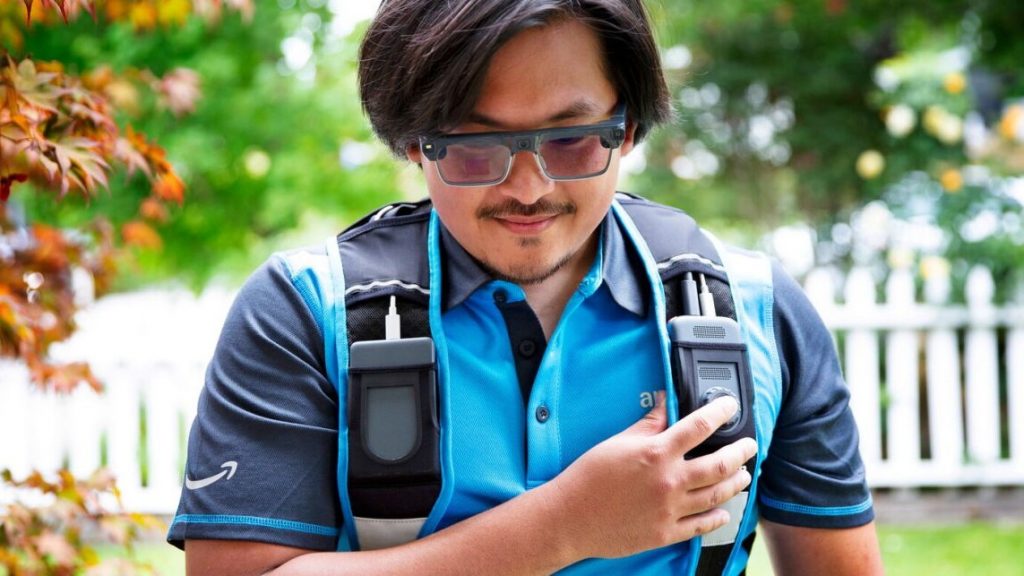
As Amazon continues its rollout of AI smart glasses, privacy concerns are growing.
Aaron Pruner
A few days ago, I crossed paths with an Amazon delivery driver who was wearing some odd-looking glasses. I paused, wondering if it was a pair of the new AI smart glasses (I reported on them last year) or if he just had questionable taste in eyewear. After Wednesday’s news, my curiosity has evolved into concern.
In a Bloomberg opinion piece, reporter Dave Lee shared his thoughts on the new AI smart glasses based on an interview with Amazon executive Viraj Chatterjee, who is spearheading the rollout. According to the report, Amazon aims to have 5,000 drivers wearing the glasses by the end of 2026, expanding to more than 20,000 by the end of 2027.
The e-commerce giant says the new AI smart glasses will track a driver’s shift from beginning to end to ensure quicker, more reliable deliveries, reduce errors and streamline delivery by giving drivers hands-free guidance. But Bloomberg’s Lee said that “the company is sleepwalking into yet another invasion-of-privacy furor.”
More from CNET
While a driver is on foot, the glasses capture static photos of everything in their line of sight at a high frequency (likely every few seconds), generating thousands of photos per shift. These images, which will include package recipients, people on the street and private property, will be handed off to real-life human employees at Amazon for analysis. The captured photos will then be fed into Amazon’s Wellspring, the company’s generative AI platform used to map neighborhoods and improve the accuracy of delivery locations.
Privacy red flags appear to be everywhere, compounded by Chatterjee telling Bloomberg that customer opt-out options haven’t even been considered.
Amazon spokesperson Leigh Anne Gullett disputed Bloomberg’s reporting, saying, “The suggestion that Amazon is using smart delivery glasses as a surveillance tool fundamentally mischaracterizes the technology and its purpose.” Gullett told CNET that Amazon continues to incorporate feedback during the pilot period and that participation is voluntary for delivery partners and drivers.


Surveillance and regimentation
When pressed on the idea of these smart glasses cameras being used for surveillance, Chatterjee explained to Bloomberg that the images will be blurred before human reviewers see them if they contain identifying information, such as a license plate or a face.
Gullett told CNET that privacy protections have been built into the technology from the beginning and that the technology features automatic data blurring, strict access controls and a physical hardware privacy switch.
But still, a lot of us will be kept in the dark. There seems to be no way for you, as the Amazon customer, to know whether these types of images even exist, as there reportedly won’t be a way to view them or request their deletion. According to the Bloomberg report, the only real way to pull up those images is to serve a warrant.
There’s also the added vulnerability of these AI devices to hacking. Given that the content may contain personally identifiable information, Amazon would be tasked with establishing strict guardrails to prevent sensitive data from falling into the wrong hands.
The smart glasses rollout also raises critical concerns regarding the regimentation of the workforce. Amazon delivery vans already use cameras and sensors to monitor driving habits and cabin behavior. If glasses track a driver’s exact movements on foot, that would create a virtually continuous log of their shift. Drivers often report that data collected under the guise of “safety and efficiency” is used to monitor performance, dock pay or penalize them.
The Latest from Aaron
‘Carrie’ Review: Mike Flanagan’s Remake Is a Timely (and Terrifying) High School Tragedy
Amazon Delivery Driver Smart Glasses Will Snap Pictures of… Everything?
Lucas Museum of Narrative Art: Star Wars Is a Small Part of This Stunning Storytelling Tribute